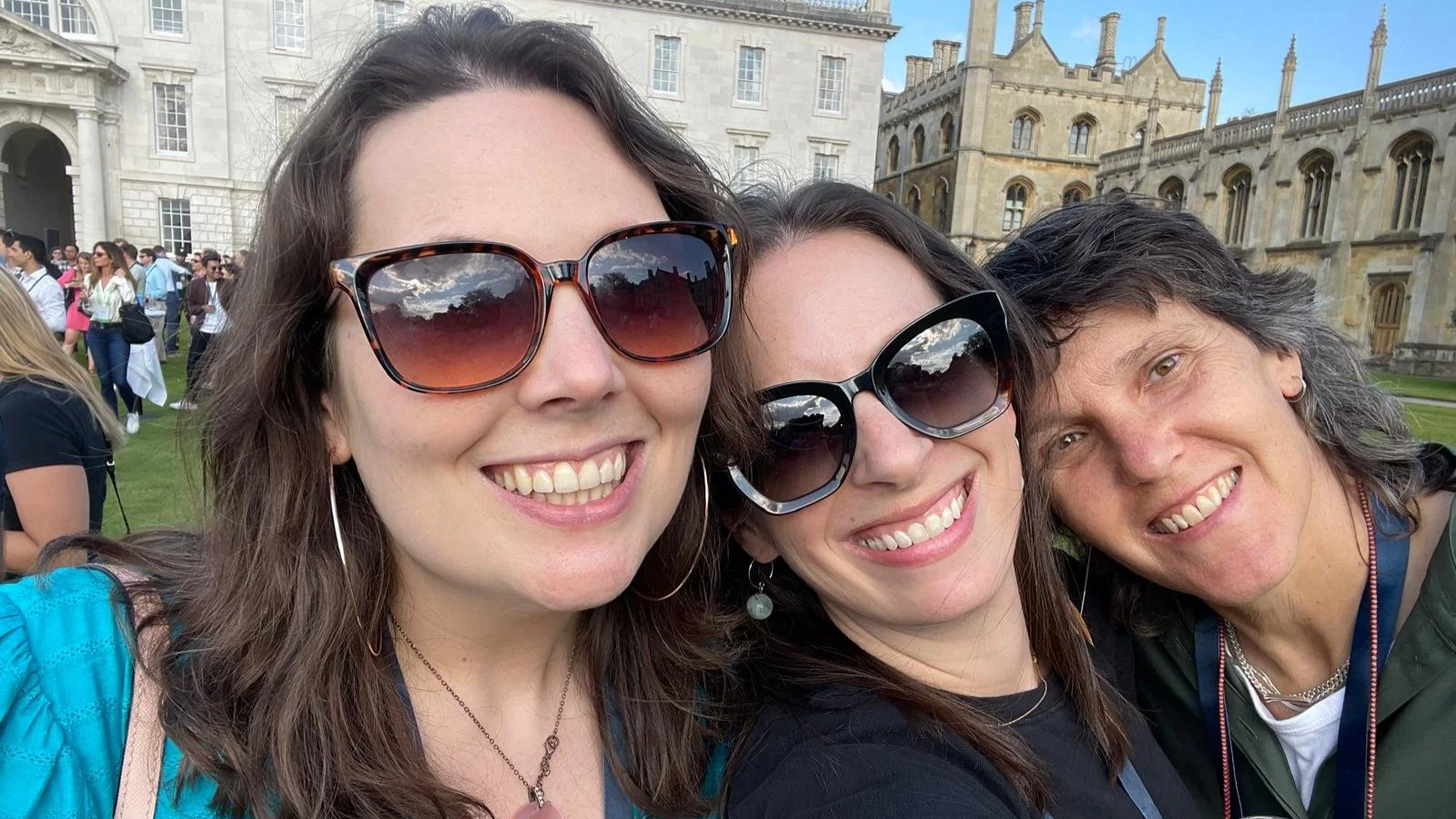
At Cambridge College (McKinsey & Company’s leadership training programme) with friends
People often joke that McKinsey is a good home for insecure overachievers. Whether or not you believe that’s true, it certainly worked out for me.
I joined the firm (as it is known by the people who work there) with the classic view of “do this for 2 years; it will look great on the CV”. I was always looking to “bank” the next career experience in my hasty way to get to the top.
What that top looked like, I had no idea — I had indeed already banked a few highlights. But I figured a short stint in a company that holds exceptional standards would set me up for “a next big thing”.
Then something strange happened in the six years I ended up staying. To my great surprise, I stopped looking up and out, and instead gazed inwards.
McKinsey gave me an environment to become something I hadn’t realised I needed: I became brave.
I’ve spent my career helping people to understand each other, collaborate, and accept new ideas. And as an expert consultant in communications and change management, I have been privileged to support leaders in some of the toughest moments of their careers.
But it took the intensity of a place like the firm to see in myself things that I often helped others navigate. Focusing on achievement wasn’t making me feel secure. Saying no frightened me. Admitting what I really wanted would mean opening myself up to failure and disappointment.
I became brave when I became willing to choose a life that might not be conventionally successful. It was not an overnight transformation. In fact, in many ways it was rather painful.
But now, stepping back, I recognise three things my time at the firm taught me, and which made me far better able to chart the path I’m taking today.
First, I learnt to build on strengths. A brilliant senior expert in change and communications took me under her wing in my first few months. I loved working with her — the perfect balance of high expectations, compassion, fun and frankly exceptional expertise. The only problem (as I saw it) was after every client interaction together, every big milestone, she sent me feedback. Always, in those moments, it was what I’d done well, and just that. Did she think I couldn’t handle criticism? One day I pressed her: forget the good stuff, where can I improve? Looking at my wryly, she said: “If you focus your time on fixing weaknesses, you will never become truly exceptional at the things you love.” The conversation that followed changed something in me: working on gaps is fine when you need, but if you want to grow and be happy, double-down on the things you enjoy and are great at. That mentor — and others that followed — helped me identify talents that I could take confidence in.
The second lesson was more difficult. McKinsey — and I imagine any organisation that values excellence so centrally — can feel relentless. From the moment you enter its doors, you are surrounded by people who are incredible, intelligent, and hard-working (I’ve worked alongside literal Olympians). You are challenged daily; there is always a way you could be better, faster. You learn and improve, but very quickly you find yourself reaching for a new, higher standard. One particularly late, difficult evening, a colleague compared our experience to a cake-eating competition where the prize is more cake. That’s not a bad thing — if you still want cake. If. I laughed and agreed I needed to pace myself more. But over time, that line helped me realise something deeper. Highly ambitious or conscientious people often mistake having more choices and opportunities for being obligated to choose the hardest one. The reality is that once you have proven yourself and earned entry to the rooms you wanted to be in, you have more of a say in your life and your journey than you probably realise. The expectations that matter most are those you set yourself: choose your own cake.
The last lesson was possible thanks to the people I met. Of course it was — it’s cliched, but you really do stay for the colleagues and clients you get to work with. I never felt on my own at the firm; I was surrounded by smart, kind people who I could turn to for advice. Sometimes at ridiculous hours of the night. I’d worked hard before, faced up to difficult situations, but it was at McKinsey I finally shed a tendency towards hyper-independence and learned to ask for help. In doing so, I found my tribe. From the Business Analyst who gave me a crash course in shortcuts at midnight (mostly because they were in pain watching over my shoulder), to the Partners who encouraged me to challenge them bluntly, because they trusted my instincts. And my beloved global gang of communications and change management consultants — the smartest, kindest, funniest of them all. Turns out, when you share with people the difficulties you’re facing, the questions you have, or the things you’d love to do but don’t know how, you build connections that go deeper and last longer than the project you work on together. It’s so much easier to do the hard things with friends and a supportive village by your side.
In writing this, I’m continuing a tradition of McKinsey leavers sharing a final email with what they’d wish they’d known when they started at the firm.
When I joined McKinsey in 2020, I hoped my exit would be to a shiny, more senior job title. Preferably very well paid.
Given that, I am likely a disappointment to my past self as much as I — a newly out, queer, divorced woman setting up on her own in October 2026 — would be a surprise.
I went to McKinsey because I thought that achievement would tell me where to go next. Instead, it gave me enough confidence to stop outsourcing decisions and make my own.
And my goodness am I happier.
I wish everyone who joins McKinsey the same opportunity to grow. And I remain immeasurably grateful to those who helped me on my way.
